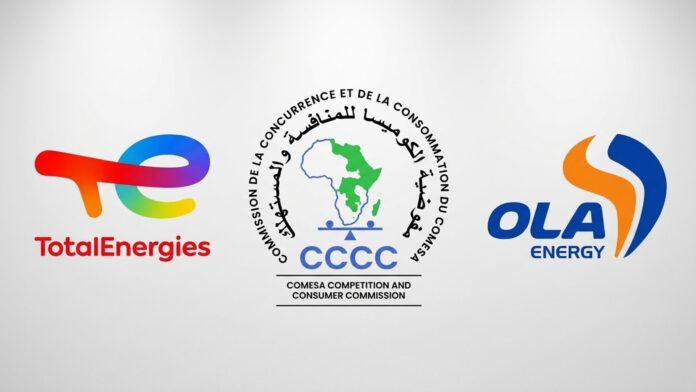
The proposed acquisition of TotalEnergies’ downstream business in Ethiopia by OLA Energy has entered a review process before the COMESA Competition and Consumer Commission (CCCC). The transaction, which would transfer more than 120 service stations along with storage facilities and distribution infrastructure, could significantly reshape Ethiopia’s petroleum market if completed.
The share purchase agreement covering the entire downstream business of TotalEnergies Marketing Ethiopia was signed on June 30, 2026, at TotalEnergies’ headquarters in Paris. Completion remains subject to the required regulatory and administrative approvals. According to OLA Energy’s announcement, the acquisition includes more than 120 service stations in major Ethiopian cities, including Addis Ababa, Dire Dawa and Mekelle. It also covers ten storage assets, logistics infrastructure, business-to-business fuel supply operations, aviation fuel services, lubricants operations and digital payment solutions.
One of the strategically important assets is a fuel storage terminal in Dukem, near Addis Ababa, with a reported capacity of 13,000 cubic metres. Alongside the other storage and logistics facilities, the terminal would expand OLA Energy’s position beyond retail fuel sales. The acquisition also includes aviation fuel supply operations at Bole International Airport, extending its significance to Ethiopia’s aviation industry.
For TotalEnergies, the proposed sale would end approximately 76 years of direct involvement in Ethiopia’s downstream petroleum market. The French company began operating in the country in 1950 and developed one of its largest privately operated fuel distribution networks. For OLA Energy, which already operates in Ethiopia, the transaction would combine two established distribution networks rather than introduce a new competitor.
According to CapitalEthiopia, Ethiopian competition authorities had temporarily halted the domestic approval process while examining concerns about the companies’ combined market share. According to those sources, the merged business could account for close to 50 per cent of Ethiopia’s retail fuel market, an estimate that has not been independently verified. A business with such a substantial distribution network could have considerable influence over fuel availability, commercial supply arrangements and competition among retailers.
However, the competitive implications cannot be assessed through station numbers alone. A comprehensive review would also need to consider sales volumes, geographic coverage, storage capacity, wholesale distribution, aviation fuel services and commercial supply contracts. The combined business would reportedly surpass National Oil Ethiopia in retail presence, although that comparison requires verification against consistent measures of market share and network size.
The involvement of the CCCC introduces a regional dimension to the transaction. COMESA’s competition framework addresses qualifying mergers and acquisitions involving businesses operating across its Common Market, examining whether a transaction could substantially prevent or lessen competition, create or strengthen a dominant position, or harm consumers and other market participants. The commission’s guidance provides for three possible outcomes: unconditional approval, approval subject to conditions, or rejection.
The CCCC and Ethiopia’s Ministry of Trade and Regional Integration signed a Cooperation Framework Agreement in 2022, providing a mechanism for coordinating enforcement, cooperating on cross-border merger reviews and sharing non-confidential market information. Ethiopia’s domestic competition framework is governed by the Trade Competition and Consumers Protection Proclamation No. 813/2013, while at the regional level the COMESA Competition and Consumer Protection Regulations of 2025 took effect on December 5, 2025. Under the revised rules, merger-notification requirements include a combined turnover or asset threshold of COMESA dollars 60 million, alongside minimum thresholds for at least two parties and an applicable two-thirds rule. The framework also provides for a notification fee of 0.1 per cent of the parties’ combined turnover or asset value within the Common Market, whichever is higher, capped at COMESA dollars 300,000. The commission generally has up to 120 days to reach a decision after receiving a complete notification, although requests for additional information can affect the timetable.
Not every acquisition involving a business operating in a COMESA member state automatically requires regional notification, as transactions must meet the relevant jurisdictional and financial criteria. Although sources have indicated that the acquisition has entered a regional review process, its precise procedural status remains unclear. The commission told Capital that it would respond formally after the relevant division had given the matter due consideration, a response that does not by itself confirm that a complete merger notification has been accepted or that a substantive assessment has begun. No final decision has been confirmed to Capital.
The outcome could influence whether the transaction proceeds unchanged, requires measures to address competition concerns or faces rejection. The acquisition forms part of OLA Energy’s strategy to expand across African petroleum markets. Formerly known as OiLibya, the company adopted the OLA Energy brand in 2018. Backed by the Libya Africa Investment Portfolio, OLA Energy operates across more than 17 African countries, with a network of more than 1,350 service stations and associated convenience retail and commercial petroleum services.