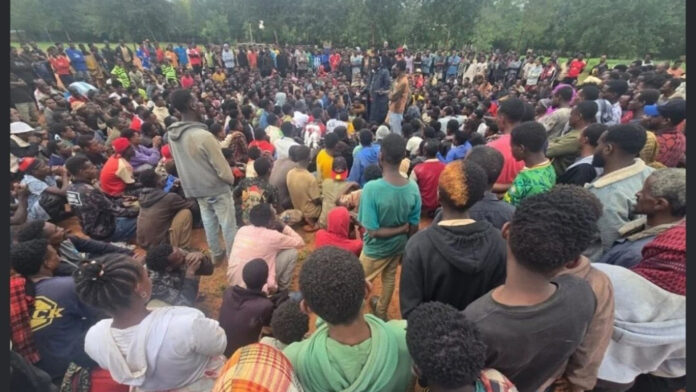
Nearly 36,000 people have crossed from Ethiopia into Kenya to escape conflict in and around Moyale, the UN Refugee Agency (UNHCR) in Kenya said, warning that food, clean water, shelter, sanitation, and healthcare are the most urgent needs facing the new arrivals.
According to UNHCR, many of those crossing the border are women and children. Some are staying with relatives and host communities, while others have sought shelter in temporary locations. UNHCR, the International Organization for Migration (IOM), UNICEF, the World Food Program (WFP), and the Kenya Red Cross Society are working alongside Kenyan authorities and humanitarian partners to coordinate assistance.
The Kenya National Commission on Human Rights (KNCHR) offered a slightly higher estimate, saying approximately 40,000 people had sought refuge in Moyale. The Commission reported that more than 15,000 people were being accommodated in eight temporary shelters, including St. Mary’s Catholic Church, Harhosha Secondary School, Manyatta Burji, and Sessi and Lanzi Mosque Hospital, among other sites. More than 20,000 others were reportedly staying with relatives and friends, placing additional pressure on host communities and already limited resources.
The KNCHR called for an urgent, coordinated, rights-based response, warning that rainfall could worsen exposure, sanitation conditions, and the risk of disease outbreaks. The Commission also highlighted urgent maternal and reproductive healthcare needs, reporting that four women had given birth at two locations in the area. It urged authorities to provide emergency medical care, food, safe water, weather-appropriate shelter, and protection services, while ensuring that asylum seekers are treated with dignity and that their rights are respected.
The Commission further urged authorities on both sides of the border to work together to manage cross-border movements safely and address the underlying causes of displacement. It called on security agencies to maintain public order while ensuring that all measures remain lawful, proportionate, and non-discriminatory. The KNCHR stressed that the reported calm on both sides of the border presented an opportunity to coordinate humanitarian assistance, protect displaced people and host communities, and prevent further suffering.
The displacement follows a week-long conflict in Moyale, a border town straddling the Oromia–Somali regional boundary in Ethiopia, where tensions over a flag dispute intensified after 13-year-old Diqqoo Jaataan Aagaa was killed in an exchange of gunfire on October 18. Subsequent clashes between security forces from the two regions spread to seven districts in southern Oromia, with residents reporting casualties, burned homes, and widespread displacement.
Humanitarian agencies warn that without sustained funding and coordinated cross-border efforts, conditions for the displaced could deteriorate rapidly, particularly as seasonal rains set in. Host communities, already stretched by limited resources, continue to absorb thousands of new arrivals, raising concerns about food security, water access, and the spread of disease in overcrowded settlements.
The response now hinges on close cooperation between Kenyan and Ethiopian authorities, humanitarian partners, and local communities to ensure that those fleeing violence receive protection and life-saving assistance while longer-term solutions to the underlying causes of the conflict are pursued.