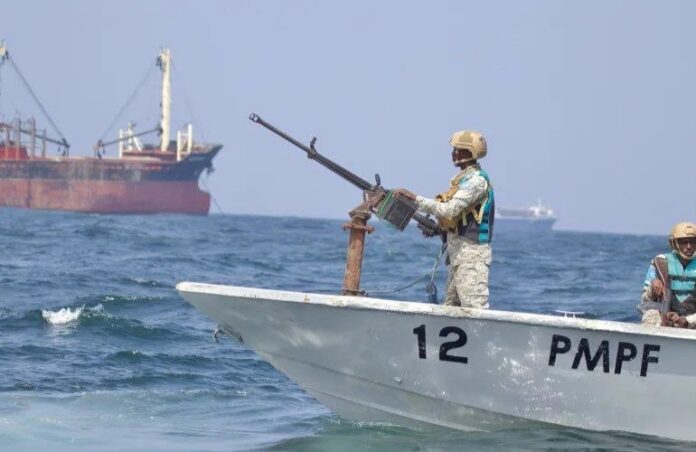
Piracy off the coast of Somalia has escalated dramatically in 2026, reaching its highest frequency in over a decade. According to a recent analysis of International Maritime Organisation (IMO) data by the AFP news agency, at least 15 maritime attacks have been recorded since the start of the year. This sharp spike marks a significant departure from the relative stability of recent years, during which the region saw no more than a handful of incidents annually, including just five in 2025.
The resurgence is heavily concentrated in the Gulf of Aden, situated between Somalia and Yemen, which serves as a vital maritime corridor linking the Red Sea to the Indian Ocean. Eight of this year’s incidents have occurred in this specific corridor since May alone. Analysts attribute this sudden wave of criminal activity to broader geopolitical instability in the Middle East. Global shipping traffic patterns have been severely disrupted following the outbreak of war between Iran, the United States, and Israel on February 28, which heavily impacted transit through the crucial Strait of Hormuz and forced commercial vessels to navigate alternative routes.
The escalation has turned the spotlight back onto the Horn of Africa, an area that hosts some of the busiest and most economically critical shipping lanes in the world. The geographic scope of the IMO data spans incidents recorded since 1994 across the Gulf of Aden, the Arabian Sea, and the wider Indian Ocean within a 2,000-kilometre radius of Somalia.
Among the 15 reported incidents, the most severe attack of 2026 took place on April 21. A heavily armed gang of approximately 30 pirates, equipped with assault rifles and grenade launchers, targeted the Honour 25. The 90-metre oil tanker was sailing north of Eyl—a coastal settlement in the semi-autonomous region of Puntland that historically operated as a primary hub for Somali pirate networks—when it was boarded. The attackers successfully seized the vessel and took its 17 crew members hostage. Months later, the ship and its crew remain under pirate control, underscoring the renewed operational capability of criminal syndicates in the region.
Despite the alarming upward trajectory, maritime security experts note that the current scale of piracy remains well below the crisis levels witnessed during its historical peak in 2011. During that era, alongside the preceding two years, the IMO documented roughly 200 attacks annually as heavily organized pirate networks terrorized commercial shipping lanes before international naval coalitions deployed robust counter-piracy patrols.
While today’s figures do not yet match the widespread lawlessness of the early 2010s, the sudden revival of attacks has alarmed international shipping associations and security agencies. The intersection of regional warfare, displaced commercial shipping traffic, and re-emerging local pirate hubs presents a complex new challenge for safeguarding one of the planet’s most indispensable maritime trade routes.