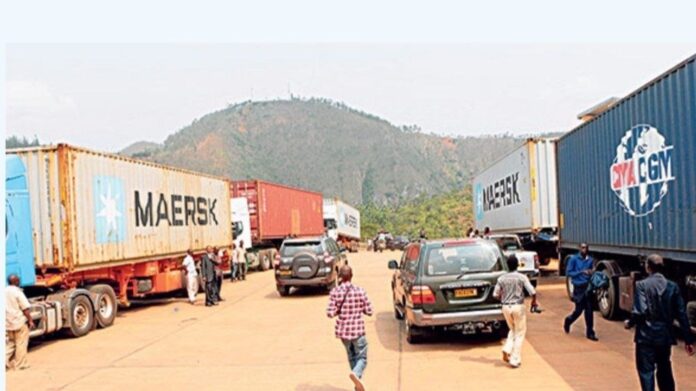
The Northern Corridor in East Africa is facing escalating pressure to cut freight emissions as cargo volumes surging through the Port of Mombasa drive a heavy demand for diesel-powered trucks. This critical trade route connects the major maritime gateway to landlocked economies, including Uganda, Rwanda, South Sudan, and the eastern Democratic Republic of Congo. With throughput at the Port of Mombasa projected to hit 50 million tonnes, regional commerce is expanding rapidly, but this growth brings a steep environmental cost fueled by long-distance road transport.
According to the Northern Corridor Transit and Transport Coordination Authority (NCTTCA), roughly 75,000 tonnes of cargo move along the corridor every single day. This massive volume requires between 2,000 and 3,000 trucks daily. Because the fleet remains overwhelmingly reliant on diesel, the continuous movement of goods from the coast to inland markets has turned road freight into a primary driver of the region’s carbon footprint.
To confront this challenge, the United Nations Environment Programme (UNEP) has stepped in with a $190,000 commitment to support the Northern Corridor Green Freight Strategy 2030. This financial backing targets two major priorities: assessing the feasibility of electric freight vehicles and improving regional greenhouse gas emissions tracking.
A cornerstone of the initiative is a collaborative feasibility study involving UNEP, the NCTTCA, and the Kenya Ports Authority (KPA). The study will evaluate replacing diesel-powered cargo-handling equipment and trucks inside the Port of Mombasa with electric models. Transport experts view the port as a practical, controlled testing ground because facility vehicles travel much shorter distances than cross-border long-haul trucks. Testing technology within a confined area allows operators to evaluate performance before attempting complex, long-distance deployments.
Additionally, the funding will update the Northern Corridor’s emissions accounting framework across Kenya, Uganda, and Rwanda. Reliable emissions data is vital for authorities to pinpoint where the greatest reductions are achievable. The program also promotes broader inclusion by working to increase women’s participation in the green transport sector.
The overarching goal of the strategy is to prepare the regional freight system for electric vehicles by 2030, establishing a firm pathway toward net-zero emissions by 2050. Significant obstacles remain, as electrifying heavy long-haul trucks requires large battery capacities, extensive driving ranges, and a robust network of charging stations. Substantial investments in regional electricity supply and infrastructure will ultimately be necessary. By tackling data collection and testing electric alternatives at the Port of Mombasa, the initiative establishes a practical foundation for a cleaner, lower-carbon future for East African trade.