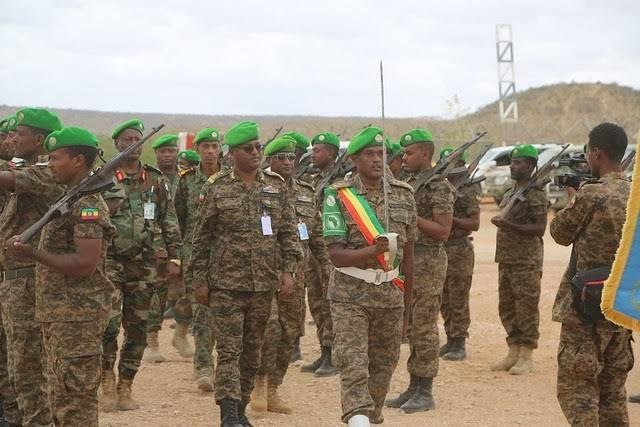
Ethiopian troops serving under the African Union Support and Stabilization Mission in Somalia (AUSSOM) have officially withdrawn from the strategic town of Burhakaba. Situated roughly 185 kilometers northwest of Mogadishu, Burhakaba functions as a crucial logistical choke point on the primary roadway connecting the capital to Baidoa, the interim administrative center of South West State. After holding the forward operating base since 2014, the Ethiopian National Defence Forces handed security responsibility over to the 60th Division of the Somali National Army (SNA).
While presented as a step toward national self-reliance, the handover has triggered immediate alarm. Burhakaba is heavily ringed by Al-Shabaab insurgents in every direction, leaving local officials deeply concerned about whether national forces are adequately prepared to defend the territory alone. Unconfirmed local accounts indicate that peacekeepers departed overnight alongside regional administrators fleeing potential insurgent reprisals, highlighting the immediate vulnerability of the area.
This tactical withdrawal unfolds against the backdrop of an unprecedented fiscal crisis threatening the entire international mission. AUSSOM’s mandate is currently scheduled to expire on December 31, 2026, but the mission faces a severe funding shortfall following a decision by the United States to oppose extending the UN Support Office in Somalia (UNSOS)—the vital logistical backbone supporting the AU forces. Although Washington signaled it would not block a political renewal of AUSSOM itself, stripping away UNSOS funding leaves the operation structurally unsustainable without viable alternative mechanisms.
The diplomatic friction was starkly apparent during the Second Extraordinary Summit in Kampala, where troop-contributing nations—including Burundi, Djibouti, Egypt, Ethiopia, Kenya, and Uganda—called for an 18-to-24-month mandate extension. However, regional analysts emphasize that this framework lacks any grounding in existing financial realities. Without immediate, predictable funding, experts argue that a compressed six-to-twelve-month wind-down is a more realistic planning horizon unless an upcoming donor conference yields emergency support.
Meanwhile, tangible signs of an impending contraction have emerged from the UN itself. UNSOS recently issued a tender seeking commercial auctioneers to liquidate a massive inventory of UN-owned assets in Somalia, including vehicles, generators, communication gear, and housing units. With reports indicating that Ethiopian forces may vacate additional besieged Bay region towns in the coming weeks, the accelerated drawdown underscores a precarious crossroads for regional stability as international stakeholders grapple with an uncertain future.