
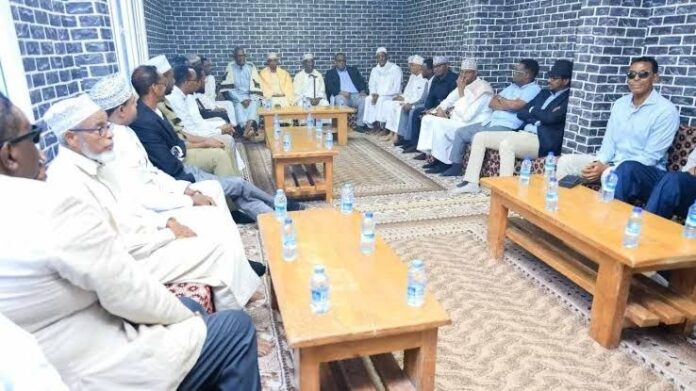
The Somali Future Council has issued an urgent call to nations contributing troops and police personnel to the African Union Support and Stabilisation Mission in Somalia (AUSSOM). The Council is strongly urging these international partners to champion and back an inclusive political agreement to properly anchor Somalia’s ongoing security transition and critical state-building framework.
In a formal open letter released on Sunday, the Council directed its appeal specifically to the leaders of key troop-contributing countries: Uganda, Kenya, Ethiopia, Djibouti, Burundi, and Egypt. The communication was timed as AUSSOM contributors gathered in Kampala to deliberate on regional security. The Council urged these leaders to actively promote robust dialogue and firmly support a Somali-led political settlement, emphasizing that the continuation of vital international security assistance directly hinges on tangible domestic political progress.
The open letter issued a stark warning regarding the current state of affairs, noting that Somalia is navigating a perilous political landscape. Presently, there is no broad agreement among key stakeholders on how to effectively manage the delicate transitional period or how to appropriately renew the nation’s constitutional institutions.
According to the Council, ongoing political disputes and deep-seated domestic divisions are actively weakening national unity. This fracturing of political will directly undermines ongoing military operations against militant extremist groups such as Al-Shabaab and Daesh, complicating security gains on the ground. Furthermore, the Council expressed deep concern regarding the deteriorating diplomatic and political relations between the Federal Government of Somalia and several federal member states, notably Puntland and Jubaland. These regional forces are heavily engaged in the active frontline fight against armed militant groups, making cooperation vital.
To steer the nation away from further instability, the Somali Future Council has put forward a concrete proposal. It has suggested the establishment of an inclusive transitional council designed to jointly oversee both constitutional processes and upcoming electoral frameworks until legitimate national institutions can be peacefully and securely renewed.
The letter argues that implementing such a governing body could play a pivotal role in restoring waning political confidence across the country. Additionally, it would help safeguard the crucial neutrality of the Somali National Army, ensuring that security forces remain focused on national defense rather than domestic political friction.
Ultimately, the Council maintains that a structured, inclusive transitional body is necessary to guarantee that the broader political and security transition is managed transparently, inclusively, and credibly for the benefit of all Somali citizens.