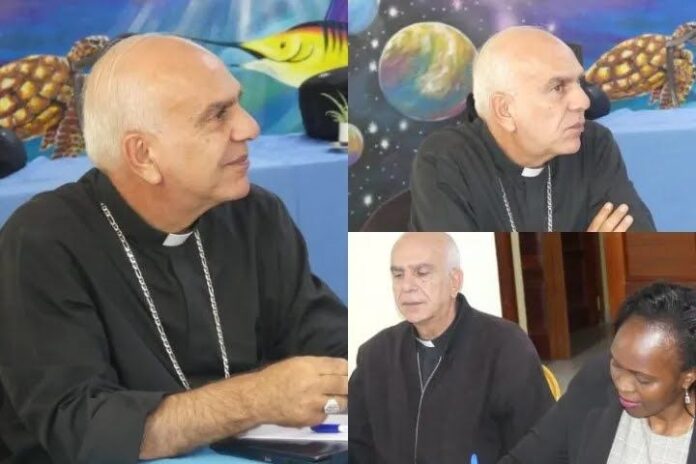
Amidst the pressing realities of the climate crisis in the Horn of Africa, Bishop Jamal Boulos Sleiman Daibes, the leader of the only Catholic Diocese in Djibouti, has issued a fervent call for “extreme measures” to safeguard the environment. His appeal comes as church leaders from across the region gather to align institutional financial practices with the principles of ecological stewardship.
Speaking on the sidelines of a workshop organized by the Laudato Si’ Movement Africa (LSM) in collaboration with the Association of Member Episcopal Conferences in Eastern Africa (AMECEA), Bishop Daibes highlighted the unique and difficult environmental context of Djibouti. Serving as the Local Ordinary of Djibouti and the Apostolic Administrator of the Catholic Diocese of Mogadiscio in Somalia, the Bishop emphasized that the Church—despite being a small minority in a Muslim-majority nation—must act as a catalyst for environmental responsibility.
“We need to work. We need to do something, whatever we can, for the environment,” Bishop Daibes stated during a July 17 interview. He noted that the Church does not necessarily need to establish entirely new programs to make an impact; instead, it can integrate environmental care into existing institutional structures, such as Caritas operations and parochial schools.
The Bishop shared his experience as a school principal, where he successfully implemented environmental clubs that encouraged students to compete in conservation efforts. He believes that fostering this spirit among the youth is essential for long-term change.
“How to educate… and how to form our new generation, those young people, to take care of the environment,” he added, emphasizing that these efforts remain a priority despite the Church’s ongoing struggles to address poverty and provide quality education in the region.
The workshop, titled “Ethical investment, fossil fuel divestment, and faith-consistent finance for Catholic leaders in Eastern Africa,” provided a platform for Bishops, development agencies, and religious congregations to discuss how to translate the vision of Pope Francis’s 2015 encyclical, laudato Si’, into tangible action.
Sr. Immaculate Tusiingwire, a member of the Medical Mission Sisters and the Laudato Si’ Global Membership Council, stressed that environmental degradation is a global problem that requires collaborative, collective action rather than isolated efforts. Reflecting on regional infrastructure projects like the East African Crude Oil Pipeline (EACOP), she urged Church leaders to move beyond dialogue and toward concrete strategies.
“This workshop should have happened a long time ago,” Sr. Tusiingwire remarked. “Nonetheless, it’s good that it has happened. We should not get used to just having meetings, meetings. What is the action?” She encouraged stakeholders to remain hopeful, suggesting that the dialogue taking place during the AMECEA Plenary Assembly is a necessary first step toward a just transition away from fossil fuels.