
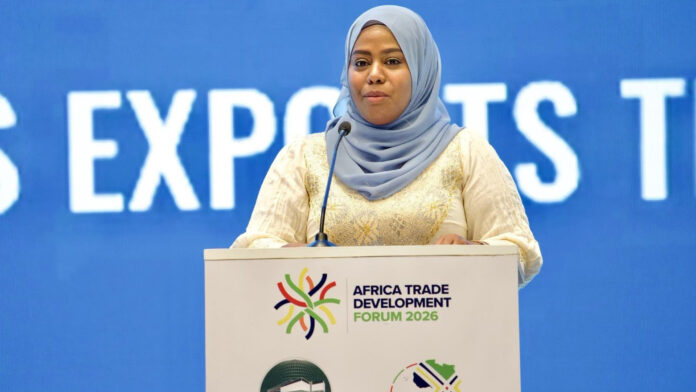
African nations must place product quality and value addition at the center of their industrialization strategies to secure a competitive foothold in international markets, Ethiopian Minister of Trade and Regional Integration Yasmin Wohabrebbi said on Monday.
Delivering the opening remarks at the Africa Trade Development Forum 2026 (ATDF 2026) in Addis Ababa, Yasmin called on governments and private-sector leaders across the continent to transition away from exporting raw commodities and primary minerals. Instead, she urged African economies to focus on producing high-standard, value-added goods capable of meeting stringent regulatory benchmarks in both regional and global markets.
“Africa’s trade prospects should not be measured by export volumes alone,” Yasmin told delegates gathered at the Ethiopian Skylight Hotel. “Quality is no longer simply a technical requirement for accessing international markets. It is a strategic instrument for competitiveness, consumer confidence, investment attraction, and sustainable economic growth.”
Co-hosted by the Government of Ethiopia and TradeMark Africa under the theme “Building Africa’s Exports Through Quality,” the two-day high-level forum brings together approximately 300 delegates, including African trade ministers, African Union officials, regulators, standards bodies, business executives, and development partners.
During her address, Yasmin identified market trust as the decisive factor determining which economies will thrive as intra-African trade barriers come down.
“Ultimately, quality is about trust: the confidence of buyers, regulators, and consumers that an African product is safe and meets the standard it claims to meet,” she explained. “As tariffs fall under the African Continental Free Trade Area (AfCFTA), it is increasingly this trust that decides who gains access to the markets.”
The minister noted that despite Africa’s wealth of natural resources, expanding consumer base, and dynamic entrepreneurial talent, the continent’s share of global trade remains disproportionately small and overly reliant on unprocessed exports. To reverse this trend, she stressed the urgency of strengthening domestic manufacturing capacity, investing in certification systems, and building resilient regional value chains.
Participants at ATDF 2026 are working toward concrete political commitments and practical mechanisms to dismantle non-tariff barriers across the continent. Key discussions center on harmonizing technical standards across borders, upgrading national quality infrastructure, and establishing mutual recognition agreements so that goods certified in one African country can move seamlessly into neighboring markets without costly re-testing.
Highlighting Ethiopia’s own trajectory, Yasmin pointed to ongoing macroeconomic and institutional reforms designed to expand productive capacity, modernize logistics, and enhance the global competitiveness of Ethiopian exporters—efforts closely aligned with the country’s preparations for World Trade Organization (WTO) accession and active participation in the AfCFTA.
Alongside ministerial dialogues and business-to-business exhibitions, the forum features the launch of a flagship policy report on standards as strategic trade infrastructure, as well as initiatives aimed at expanding affordable trade finance for Sub-Saharan businesses.