A senior Emirati diplomat on Wednesday forcefully rejected allegations by Somalia’s president that the United Arab Emirates has been meddling in the Horn of Africa nation’s internal affairs, dismissing the claims as the product of shifting political loyalties and domestic maneuvering in Mogadishu.
The sharp diplomatic exchange underscores a severe deterioration in relations between the two countries, following months of escalating friction over regional autonomy, strategic maritime ports, and shifting geopolitical alliances across the Red Sea and Gulf of Aden.
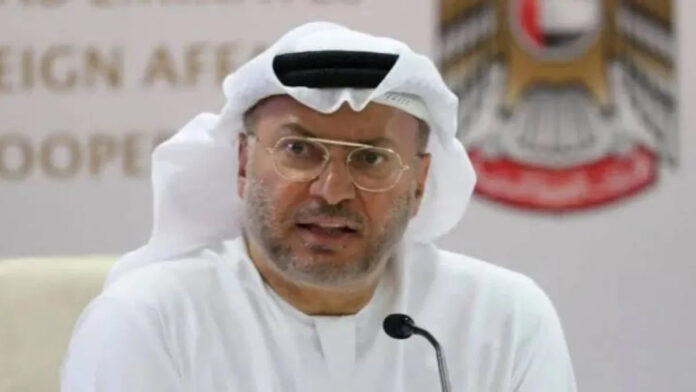
In a pointed statement posted on the social media platform X, Anwar Gargash, diplomatic adviser to the UAE president, pushed back against recent remarks made by Somali President Hassan Sheikh Mohamud. Gargash characterized the Somali leader’s criticisms as inconsistent with his past positions and driven by internal political pressures rather than genuine national interest.
“The outgoing Somali president’s attack on the UAE reflects the shifting nature of his positions and policies, and raises questions about his prioritisation of personal calculations over his country’s national interests,” Gargash wrote.
Emphasizing Abu Dhabi’s historical engagement in the region, Gargash maintained that the Emirates has consistently supported Somalia during periods of acute crisis. “The UAE has stood by Somalia and its people in their darkest hours,” he stated, adding that Abu Dhabi regrets seeing “internal power struggles dragging Somalia into regional disputes that do not serve its people’s interests or their aspirations for security and stability.” Despite the diplomatic rift at the leadership level, Gargash asserted that the foundational bond between the UAE and the Somali public “will remain deeper and stronger than fleeting political disputes, personal calculations, and political ambitions.”
Gargash’s remarks came in direct response to a televised address delivered by President Mohamud on Tuesday, in which the Somali head of state accused Abu Dhabi of conducting a multi-year campaign of interference that has compromised Somalia’s sovereignty, territorial integrity, and national cohesion.
During his broadcast, Mohamud outlined a sweeping list of grievances against the Gulf nation. Chief among them were commercial port agreements the UAE negotiated directly with Somalia’s federal member states—specifically covering the strategic ports of Berbera, Bosaso, and Kismayo—bypassing the central administration in Mogadishu. Mohamud further alleged that the UAE had established unauthorized military installations and funded armed forces operating outside Somalia’s national chain of command, thereby exacerbating domestic political divisions.
The Somali president also leveled broader regional accusations, claiming Abu Dhabi played an instrumental role in facilitating Israel’s diplomatic recognition of the breakaway region of Somaliland in December 2025. Additionally, Mohamud accused the UAE of utilizing the port of Berbera in January to transit a Yemeni separatist leader without obtaining clearance from Mogadishu.
Following the president’s address, Somalia’s Ministry of Foreign Affairs issued a formal statement reinforcing Mogadishu’s stance. The ministry declared that the federal government rejects any foreign engagement or parallel security arrangements that circumvent central state institutions, reiterating that Mogadishu holds sole constitutional authority over the nation’s foreign policy. Calling on Abu Dhabi to channel all bilateral dealings exclusively through the Federal Government, the ministry vowed to take “all necessary lawful measures” to safeguard national sovereignty, while drawing a distinction between Emirati state policies and the goodwill shared between the two nations’ citizens.
The diplomatic crisis reached a boiling point earlier this year in January, when Mogadishu moved to annul all existing agreements with the UAE—including bilateral security cooperation pacts and contracts governing the three regional ports—and barred Emirati military and cargo aircraft from entering Somali airspace.