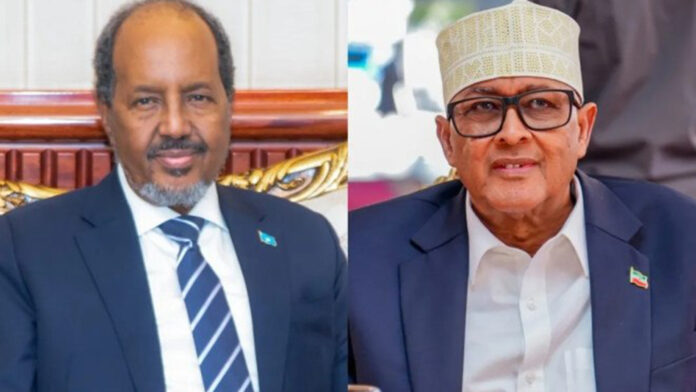
Somaliland has firmly rejected recent remarks made by Somali President Hassan Sheikh Mohamud alleging that Israel plans to establish a naval base and utilize the airport in the port city of Berbera. Hargeisa’s foreign ministry labeled Mogadishu’s claims as unfounded misrepresentations, accusing the central government of interfering in its sovereign international affairs.
The diplomatic spat follows an exclusive interview broadcast by Al Jazeera, in which President Hassan Sheikh Mohamud stated that Somalia would reject any Israeli military footprint on its territory “under any circumstances”. Mohamud asserted that Tel Aviv intended to leverage Berbera’s strategic position on the Gulf of Aden—situated close to the vital Bab al-Mandeb Strait—to project power closer to Gulf states and Iran. The Somali leader characterized these moves as a destabilizing effort to pull the Horn of Africa into wider Middle Eastern conflicts.
Responding swiftly to the allegations, Somaliland’s foreign ministry issued a sharp rebuke, maintaining that the federal government in Mogadishu holds no legal or administrative authority to dictate Somaliland’s foreign policy or speak on behalf of its population.
The ministry emphasized that its diplomatic engagements and foreign partnerships reflect independent decisions aimed at fostering mutual development, security, and regional stability. Furthermore, officials dismissed assertions that the coastal hub of Berbera could ever serve as a launchpad for military actions against neighboring nations, condemning what it termed as threats of force and unwarranted external interference.
The latest friction compounds longstanding tensions over sovereignty. Somaliland operated as an independent protectorate before uniting with Italian Somaliland in 1960, and later reasserted its unilateral independence in 1991. While functioning with its own administration, currency, and security architecture, Somaliland’s geopolitical standing has faced heightened scrutiny following diplomatic overtures with international partners.
The friction also mirrors ongoing deadlocks regarding landlocked Ethiopia’s quest for sea access. While Somaliland defended its memorandum of understanding signed with Addis Ababa to secure commercial and maritime corridors, Mogadishu continues to decry such cross-border pacts as violations of its territorial integrity. As strategic competition across the Red Sea corridor intensifies, the deepening divide between Hargeisa and Mogadishu underscores the fragile geopolitical balance governing East Africa’s critical maritime trade routes.