Ugandan President Yoweri Museveni has announced plans to hold high-level bilateral talks with Tanzanian President Samia Suluhu Hassan to seek formal clarification regarding the sudden relocation of a multi-billion-dollar East African oil refinery project from Tanga, Tanzania, to Lamu, Kenya.
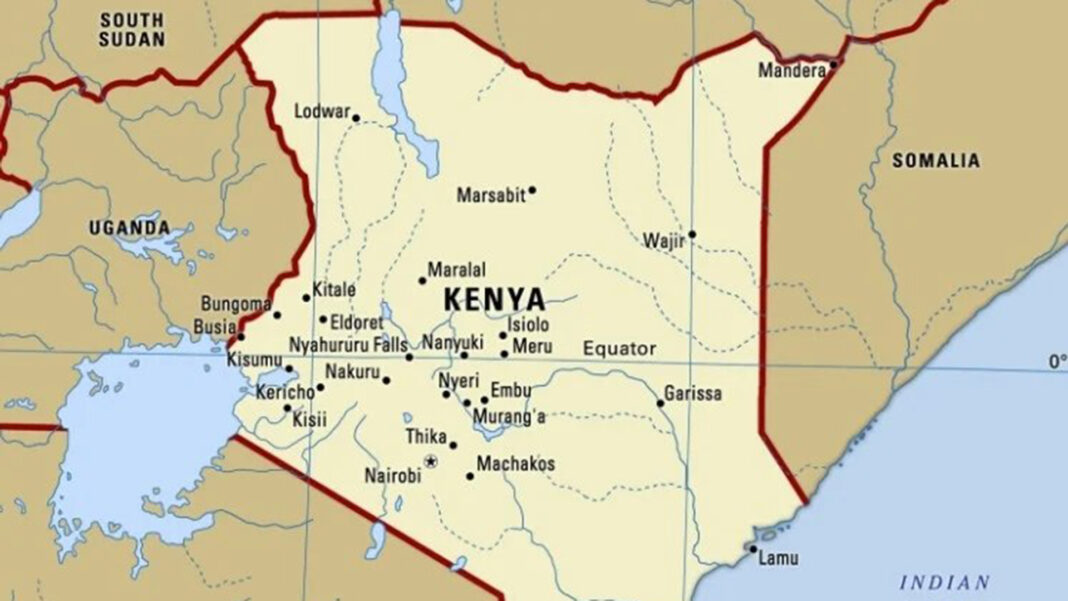
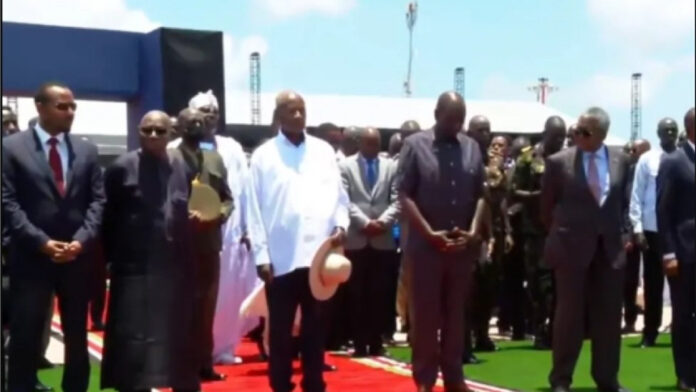
President Museveni made the remarks during the high-profile groundbreaking ceremony for the mega petroleum facility in Lamu, Kenya. The event brought together several regional heads of state and senior government officials—including Kenyan President William Ruto, Ethiopian Prime Minister Abiy Ahmed, and Benin’s President Romuald Wadagni—to witness the formal launch of the Sh2.2 trillion ($16 billion) infrastructural undertaking backed by Nigerian billionaire industrialist Aliko Dangote.
The high-stakes energy project, designed to have a massive processing capacity of 700,000 barrels of crude oil per day, has reshaped the geopolitical landscape of East Africa’s petroleum sector. Initially, regional discussions heavily favored locating the multi-producer processing plant in Tanga, Tanzania. This alignment made strategic sense due to its direct linkage with Uganda’s oil production fields through the proposed East African Crude Oil Pipeline (EACOP), which is engineered to transport crude oil from Uganda’s Lake Albert region to the Chongoleani terminal near the Tanzanian coast.
However, plans took a definitive turn toward the Kenyan coast, where Dangote identified Lamu as the ideal deep-water port and industrial hub capable of anchoring the massive undertaking. While endorsing the project’s long-term regional utility, Museveni emphasized that he intends to consult closely with President Suluhu to review the underlying factors of the geographic pivot. The dialogue aims to ensure that ongoing cooperative projects between Uganda and Tanzania—such as the newly established Tanga Regional Energy Hub—remain well-coordinated and mutually beneficial.
During the ceremony, President Museveni reiterated his long-standing advocacy for domestic and regional value addition, arguing that African nations must stop exporting raw, unprocessed commodities. Pointing to Uganda’s persistent efforts to build its own refinery capacity in Hoima, Museveni noted that East Africa requires robust local processing facilities to significantly cut down heavy reliance on imported refined petroleum products.
While expressing strong political support for the overarching objectives of the Lamu facility, Museveni adopted a cautious financial stance, indicating that Uganda will hold off on immediate capital commitments until full consultations are concluded.
“So this one [Lamu] I support, but will not invest yet,” Museveni stated, highlighting the need for absolute clarity on how the new coastal mega-refinery integrates with existing bilateral energy frameworks.
The Lamu facility—slated for completion around 2030—is expected to inject massive momentum into the regional economy by creating tens of thousands of jobs, fostering petrochemical industries, and establishing dedicated technical training institutions for local engineers.
As Kenya aggressively moves forward with a 40-month completion target under the leadership of President Ruto and backing from Dangote, the diplomatic engagements between Kampala and Dodoma will play a critical role in synchronizing the parallel energy corridors developing across East Africa. Museveni’s upcoming discussions with President Suluhu are expected to clear the air, ensuring that regional cooperation triumphs over competition as the bloc steps into a new era of industrial self-reliance.