New York, USA
Ten African countries have announced increased financial pledges to the International Fund for Agricultural Development, calling on international partners to match their commitment and accelerate investment in rural economies, smallholder farmers and climate-resilient food systems.
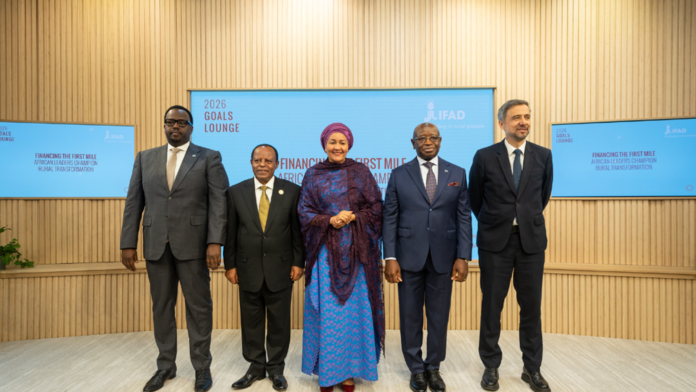
The pledges were announced on September 25 during high-level meetings held alongside the 81st session of the United Nations General Assembly in New York.
Burundi, Chad, Ethiopia, Guinea, Kenya, Rwanda, Sierra Leone, Somalia, Sudan and Zimbabwe have collectively pledged nearly US$9 million to IFAD’s fourteenth replenishment cycle, known as IFAD14, which will cover the 2028–2030 period.
Several of the countries more than tripled their previous three-year contributions to the Fund, while the largest increases were nearly 10 times higher than earlier commitments.
The announcement comes as African food systems face mounting pressure from climate shocks, conflict, rising energy costs, high food prices and constrained public finances. The countries said rural investment should be treated as a strategic priority for food security, employment creation, economic transformation and long-term stability.
Africa’s rural economy is expected to play a central role in absorbing the continent’s rapidly growing labour force. With the largest generation of young people in its history entering the job market, African leaders said investment in agriculture, rural enterprises and food systems will shape the continent’s economic future for decades.
Alvaro Lario, President of IFAD, said African governments were demonstrating that rural transformation must be driven by greater ambition from both the continent and development partners.
“African leaders recognize IFAD14 as a critical platform for strengthening the continent’s agrifood systems,” Lario said. “With nearly 60% of IFAD’s portfolio invested in Africa and the Fund’s focus on the first mile of food systems, IFAD is uniquely positioned to both channel and catalyse investment to rural areas where the greatest opportunities exist to create jobs, build resilience and accelerate inclusive growth.”
Ethiopian President Taye Atske Selassie said Ethiopia’s contribution reflected the country’s belief that food security, youth employment and economic prosperity depend on the success of smallholder farmers.
“Ethiopia’s commitment to IFAD14 reflects a fundamental conviction: food security, economic prosperity and the future of our youth are inseparable from the success of our smallholders,” Taye said.“Transforming Africa’s agriculture from a burden into an engine of growth requires that our continent takes primary responsibility for financing its own rural development,” he added.
Ethiopia’s pledge comes as the country seeks to expand agricultural productivity, improve rural livelihoods and strengthen resilience to drought, land degradation and climate variability. Agriculture remains a major source of employment and income for millions of Ethiopian households, while smallholder farmers continue to account for a large share of domestic food production.
The President’s remarks also reflect a broader call for African countries to increase domestic financing for agricultural and rural development rather than relying solely on external aid.
Kenyan President William Ruto said Kenya had increased its IFAD contribution by 50%, describing the move as an investment in rural communities and young farmers.
“Kenya’s 50% increase in its pledge to IFAD is an investment in our rural communities, and especially our young farmers, who represent one of Africa’s greatest opportunities for growth and transformation,” Ruto said.
He called on other donors and development partners to increase their contributions to IFAD14 to promote rural prosperity, improve food security and strengthen resilience across Africa and other developing regions.
Ruto has frequently identified agriculture as a central pillar of Kenya’s economic strategy, particularly in the context of rising food prices, climate shocks and youth unemployment. Kenya’s rural areas have faced repeated droughts and changing rainfall patterns, underscoring the need for investment in irrigation, climate-smart agriculture, storage, markets and agricultural finance.
IFAD said its financing model enables contributions from member states to be combined with loan repayments, supplementary funds, borrowed capital and co-financing from governments, development institutions, private-sector actors and small-scale producers.
The Fund estimates that every US$1 in core contributions can generate approximately US$6 in investment at the country level.IFAD has an AA+ credit rating and is the only United Nations fund authorised to issue sustainable bonds on capital markets. Since 2022, it has issued more than US$1 billion in sustainable bonds to finance rural development and food-system investments.
According to IFAD’s latest development-effectiveness report, projects assessed under the Fund’s most recent replenishment cycle increased rural incomes by an average of 34%, raised agricultural productive capacity by 35% and improved market access by 34%.
The figures underline the potential importance of rural investment in countries where smallholder agriculture supports a large share of employment, food supply and export earnings.
Somali President Hassan Sheikh Mohamud said long-term investment in farmers, pastoralists and rural businesses was central to the country’s recovery and future prosperity.“Somalia’s future rests on our ability to build livelihoods that can withstand climate extremes, produce and sell more of the food we consume, and give rural communities a stronger stake in our economy,” he said.“Through IFAD14, we are driving long-term investments in the farmers, pastoralists and rural businesses who are at the heart of Somalia’s recovery and future prosperity.”
Somalia’s agricultural and pastoral communities have faced recurrent drought, flooding, insecurity and displacement. Investment in resilient livelihoods, water systems, livestock production, value chains and rural markets is viewed as essential to reducing dependence on humanitarian assistance.
Sierra Leonean President Julius Maada Bio said agriculture should be viewed as a foundation for food security, jobs and national development.
“Agriculture is the foundation of food security, our livelihood and our future,” Bio said. “If we want to transform food systems and create jobs, we must invest in people who produce our food. IFAD is doing its part, and I invite other partners to do the same.”The African pledges are intended to send a message to traditional donors, international financial institutions and private investors that rural development requires stronger and more predictable financing.
The countries said investment in agriculture should go beyond increasing food production. It should support rural enterprises, processing, storage, transport, markets, financial inclusion, climate adaptation, youth employment and women’s economic participation.As energy, climate and conflict shocks continue to strain food systems across Africa, leaders said rural transformation is becoming a central element of national economic policy—not simply an agricultural objective.
The new commitments to IFAD14 place African governments among the countries calling for a more ambitious global approach to financing rural livelihoods and food systems. The key test will be whether other development partners match the increased pledges and provide the resources needed to translate commitments into investments that reach smallholder farmers and rural communities.