
A senior official at Uganda’s state-run Petroleum Authority has welcomed a global roadmap to transition away from fossil fuels, describing it as “very useful” to the country’s energy transition planning — even as the East African nation prepares to export its first barrel of oil next month.
The Brazil-led roadmap, presented at the COP31 climate talks in Türkiye, invites countries to draw up national plans to build clean energy systems by 2028 and to cut coal, oil and gas supply and demand after 2031. The official told Climate Home News that the roadmap is “fundamental” to Uganda’s transition planning as it prepares to become the world’s newest oil exporter.
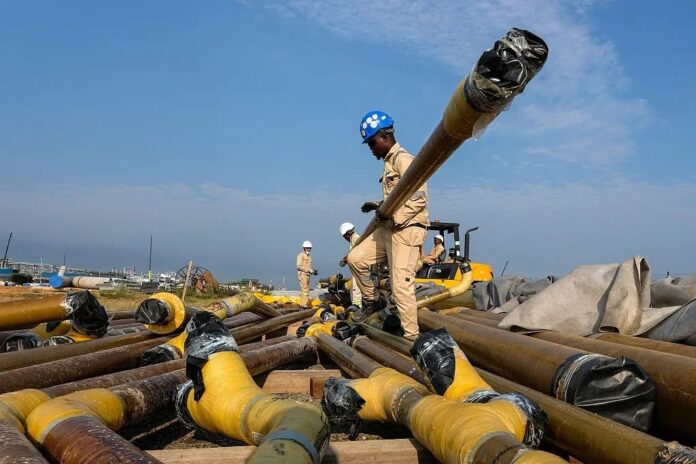
Uganda’s position illustrates the tension facing many emerging economies that are developing fossil fuel resources even as the international community pushes for a phase-down. The country has invested heavily in its oil sector, including the Tilenga oilfield, where Sinopec employees have been photographed offloading water pipes during construction of the Central Processing Facility.
The roadmap’s timeline — requiring national clean energy plans by 2028 and fossil fuel supply and demand cuts after 2031 — gives Uganda a window to align its transition strategy with its export ambitions. The official’s comments suggest Kampala views the global framework not as an obstacle but as a planning tool.
The development comes as COP31 negotiations in Türkiye enter their final stretch. On Day 11, countries decried a cover text for omitting fossil fuels, signaling continued friction over how explicitly the final agreement should address the phase-down of coal, oil and gas. A new draft on Day 10 had kept an electrification goal but dropped references to fossil fuels, prompting pushback from nations seeking stronger language.
The summit has also weighed a “35×35” pledge, with the International Energy Agency noting that the Strait of Hormuz crisis is driving electrification efforts. Other agenda items have included climate finance for Bangladesh, a replenishment push for the Green Climate Fund, and warnings from ocean advocates that the COP31 agreement should not be read as a boost for geoengineering.
Uganda’s oil ambitions are closely tied to the East African Crude Oil Pipeline (EACOP), a controversial project that has drawn criticism from environmental groups. The country’s emergence as an oil exporter next month will mark a significant milestone in its economic development, even as global climate policy increasingly turns against fossil fuel expansion.