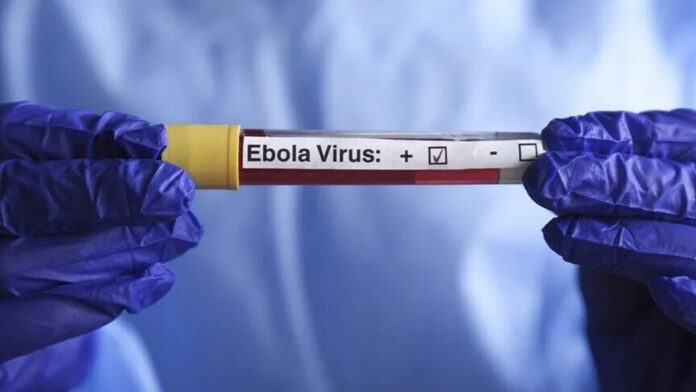
Two experimental vaccines developed specifically against the Bundibugyo Ebola virus are expected to begin phase 2 clinical trials next week in the Democratic Republic of the Congo, the World Health Organization said Tuesday.
Speaking at a WHO news conference in Geneva, Dr. Meg Doherty said the candidates received approval last week to advance to phase 2 of the Tumani randomized controlled trial. Oxford University and the Serum Institute of India developed the first vaccine, ChAdOx1. The second was developed by Moderna.
“Both of them last week were provided approval to move into phase two,” said Doherty.
She said testing was expected to begin Nov. 26 or 27 in Bunia, where the trial is operating. The second phase will assess vaccine safety and immunogenicity — the ability to trigger an immune response. Candidates meeting the required criteria will advance to phase 3, where researchers will evaluate their effectiveness against a comparator.
The Tumani trial, launched Oct. 23, is designed to accommodate additional vaccine candidates as they become available. More than 140 participants have already enrolled, with thousands expected to participate as researchers expand testing to additional sites and deploy mobile teams, according to the WHO expert.
The Bundibugyo virus is one of several known Ebola species and was first identified during an outbreak in Uganda in 2007. Unlike the more commonly studied Zaire Ebola virus — which was the target of the vaccines and treatments deployed during the 2014–2016 West Africa epidemic and subsequent outbreaks in the DRC — Bundibugyo has no licensed vaccine or specific treatment. That gap has made the current outbreak particularly challenging, and it explains why researchers are testing candidates designed specifically against this strain rather than relying on existing Zaire-focused tools.
The current outbreak is unfolding against a backdrop of longstanding difficulties in the DRC, where Ebola response efforts have repeatedly been hampered by armed conflict, community distrust and weak health infrastructure. The country has experienced more than a dozen Ebola outbreaks since the virus was first discovered there in 1976, including a major Zaire-strain outbreak in North Kivu and Ituri provinces between 2018 and 2020 that killed more than 2,200 people.
WHO Director-General Tedros Adhanom Ghebreyesus highlighted progress in vaccine development amid the outbreak.
“We expect two candidate vaccines developed specifically for Bundibugyo virus to begin testing as early as next week,” he said.
Tedros said the outbreak had surpassed 11,300 cases and 5,500 deaths, with between 400 and 500 new infections still being reported weekly. He warned that insecurity, attacks on health workers and delays in identifying infections continued to undermine efforts to contain the epidemic.
“Such attacks also discourage people from seeking care in an Ebola treatment center,” he said.
The WHO has repeatedly stressed that trust-building with local communities is as critical as biomedical tools in stopping Ebola transmission, noting that delays in seeking care can amplify spread. The phase 2 launch in Bunia will be closely watched as a test of whether the new candidates can safely generate strong immune responses — the first step toward potentially adding Bundibugyo-specific vaccines to the global Ebola arsenal.