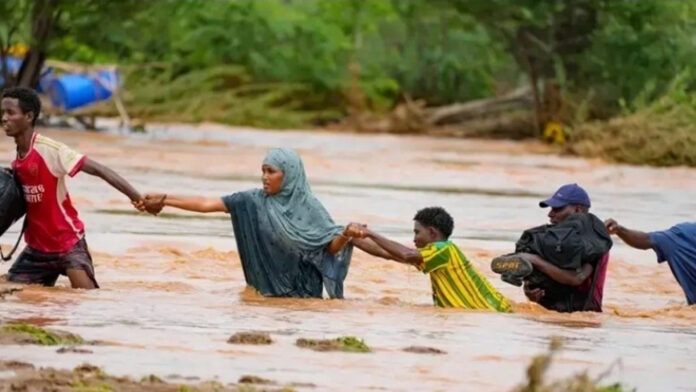
Kenya’s Meteorological Department has projected above-average rainfall across much of the country in its November-to-January seasonal outlook, even as the World Meteorological Organization (WMO) warns that a strengthening El Niño could raise the risk of extreme weather in several parts of the world.
According to Kenya Met, the expected above-average rainfall will cover a wide swath of the country, including Nairobi, Kisii, Kisumu, Kakamega, Mombasa and Tana River. The agency also expects warmer-than-average temperatures nationwide in November.
The seasonal outlook indicates how rainfall may compare with the long-term average, rather than predicting specific amounts or timing. County forecasts and short-term advisories provide more specific information on where and when heavy rain is expected.
The forecast comes against the backdrop of a strengthening El Niño, which develops when sea surface temperatures in the central and eastern tropical Pacific become warmer than usual. The WMO’s October seasonal outlook projects stronger El Niño conditions from November 2026 to January 2027, with Pacific Ocean warming expected to peak around December 2026. The agency also expects El Niño to persist through February 2027.
The warming alters atmospheric circulation, increasing the likelihood of heavy rainfall in some regions and dry or unusually hot conditions in others. Conditions in the Indian Ocean, including the Indian Ocean Dipole, also influence how much rain reaches different parts of East Africa, meaning the region’s rainfall patterns are shaped by multiple interacting systems rather than El Niño alone.
Heavy rain can bring both benefits and disruption. On the positive side, it can replenish water supplies and improve pasture for livestock. However, where downpours are intense, runoff can wash away topsoil, flood grazing areas and damage crops. Flooded roads and bridges can also cut off access to schools, markets and health facilities, disrupting daily life and economic activity.
Households near rivers, on unstable slopes or in areas with poor drainage face particular risks during heavy rains. Kenya Met advises residents to follow official weather updates and avoid walking or driving across flooded roads or swollen rivers. The agency also notes that flooding can occur downstream from areas that have received heavy rain, meaning communities far from the original downpour may still face danger.
The outlook underscores the importance of preparedness as the country enters a period of enhanced rainfall risk. Residents are encouraged to monitor county-level forecasts and short-term advisories, which offer more precise guidance on the timing and location of heavy rain than the seasonal outlook alone. With El Niño conditions expected to strengthen and persist into early 2027, authorities and communities alike will need to stay alert to the potential for extreme weather in the months ahead.