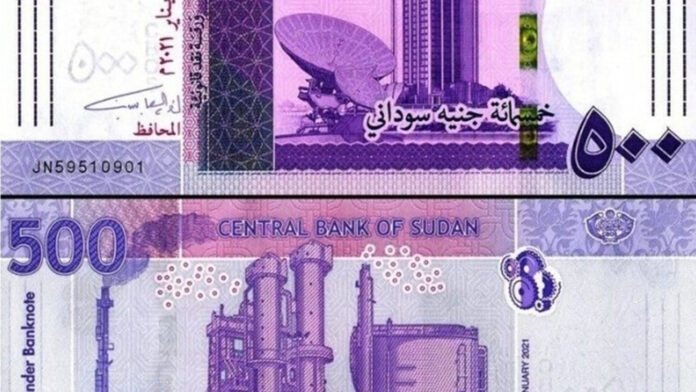
The Central Bank of Sudan has officially announced a decisive nationwide maneuver regarding the country’s physical monetary supply, stating that all older prints of the 500-pound banknote will be systematically pulled from circulation. The withdrawal process is structured over a strict three-month implementation window, which officially began on October 1.
This financial measure forms the core of the latest stage in a broader, phased currency overhaul initiative originally launched by the central bank in December 2024. The ongoing overhaul was designed to comprehensively replace higher-value legacy currency notes, specifically targeting both 1,000-pound and 500-pound denominations. Under the explicit parameters outlined in the central bank’s official statement, any 500-pound notes printed in the year 2023 or earlier will completely lose their legal tender status starting January 1, 2027. Following that transition threshold, these older notes will immediately become invalid for settling debts, conducting commercial trade, or executing everyday market transactions.
To comply with the directive, holders of the targeted banknotes must deposit them at face value directly into active accounts at authorized commercial bank branches. The regulator has established a firm deadline for this process, requiring all deposits to be finalized by the close of business on December 31.
The rollout of this current phase focuses heavily on the conflict-stricken western and central territories of Darfur and Kordofan. These specific regions were bypassed during earlier stages of the currency replacement program due to persistent insecurity and volatile security conditions. Previous efforts had made significant headway elsewhere; for instance, the central bank successfully finalized the second phase of the program in mid-May, which safely covered major urban and regional hubs including Khartoum, Gezira, and White Nile states.
Financial authorities in Sudan have faced an uphill battle in attempting to retain baseline monetary and fiscal control. These ongoing structural difficulties come against the backdrop of a devastating civil war that erupted abruptly in April 2023. The armed conflict has severely impacted the nation on multiple fronts, devastating critical infrastructure, bringing domestic industrial and agricultural production to a near standstill, accelerating runaway inflation rates, and severely compromising the overall purchasing power of everyday consumers. These acute pressures compound long-standing structural weaknesses that have plagued the Sudanese economy for years, making the current currency overhaul a desperate attempt by regulators to restore stability to a fracturing financial system.