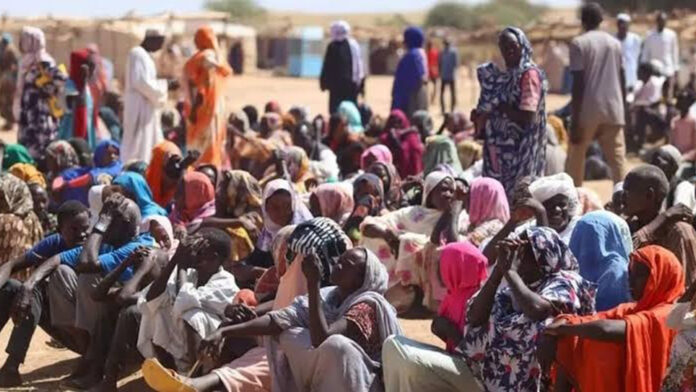
More than 5.1 million people have returned to their areas of origin across Sudan, marking a complex chapter in one of the world’s largest humanitarian emergencies. According to new data released by the International Organization for Migration (IOM), this milestone is tempered by the reality that another 8.6 million people remain displaced, facing severe hardships as they navigate a country still deeply affected by ongoing violence.
New figures from the IOM’s Displacement Tracking Matrix (DTM) record 5,145,165 returnees spread across 76 localities in nine states, representing a four percent increase from the previous month. Concurrently, 8,583,274 individuals remain internally displaced across 185 localities in all 18 states—reflecting a slight decrease of about one percent from last month and a 26 percent drop from the peak of the crisis.
IOM Director General Amy Pope highlighted the profound resilience of the population, noting that the mass returns speak volumes about the courage and hope of the Sudanese people. However, she emphasized that reaching home is merely the first step of a long and difficult recovery.
“Many families are returning to homes that are damaged, schools that are closed and clinics that barely function. There are few livelihood opportunities. If we don’t help them now, many will be forced to move again,” Pope warned.
A closer look at the returnee demographics reveals that the vast majority—82 percent, or roughly 4.2 million people—had been internally displaced within Sudan. The remaining 18 percent, approximately 930,000 individuals, returned from abroad. Among those coming back from other countries, Egypt was the primary destination of origin at 50 percent, followed by South Sudan at 25 percent, Libya at 10 percent, and Gulf countries at 8 percent.
Particularly concerning is the age distribution within these affected populations. Approximately half of all displaced individuals and 50 percent of returnees are under the age of 18. Millions of children and adolescents face severely interrupted schooling, restricted access to critical healthcare, and major protection gaps. Ensuring these young populations have access to basic services and opportunities will be essential for Sudan’s long-term stability and recovery.
While the decline in overall displacement from its peak offers a rare sign of progress, new displacement continues to be driven by persistent insecurity in regions such as Darfur, Kordofan, and Blue Nile. The infrastructure in high-return areas is stretched to breaking point, placing intense pressure on both returning families and the local host communities trying to support them.
In response to these compounding challenges, the IOM is urgently calling on governments, international donors, development partners, and financial institutions to act immediately. Humanitarian assistance must continue for vulnerable populations, but long-term structural investments are equally critical. Restoring basic services, rebuilding damaged infrastructure, and creating sustainable livelihoods are vital steps to ensure that families can remain safely in their communities and withstand future shocks.