African drugmakers and health researchers are starting to connect local pharmaceutical production with the continent’s long-running work on sickle cell disease, as WHO pushes for wider access to hydroxyurea and child-friendly formulations.
This is showing up in Senegal and Nigeria, where locally developed or manufactured treatments are beginning to add a production layer to Africa’s response to a disease that disproportionately affects the continent.
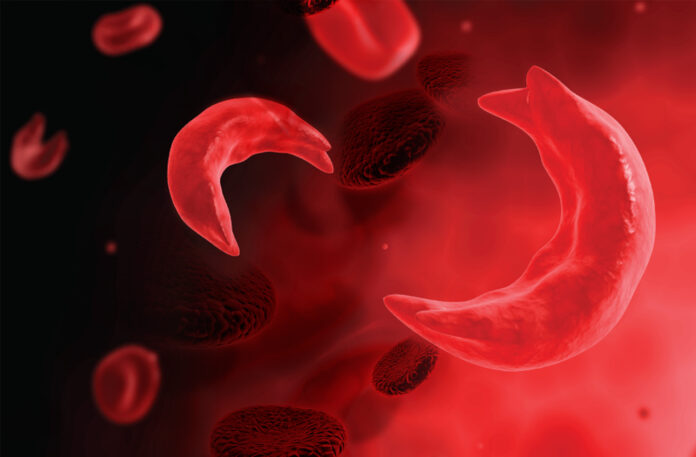
Sickle cell disease is an inherited blood disorder in which red blood cells become rigid and sickle-shaped, restricting blood flow and causing anaemia, severe pain and damage to organs.
Hydroxyurea is an established treatment that helps reduce painful crises and other complications by increasing the production of fetal haemoglobin, which makes red blood cells less likely to sickle.
That is prompting a renewed focus on how the medicine is produced, priced and delivered to African patients.
WHO estimates that 7.74 million people were living with sickle cell disease globally in 2021, with sub-Saharan Africa accounting for nearly 80% of cases.
The disease also contributed to an estimated 81,100 deaths among children under five in 2021, according to WHO.
The agency now strongly recommends hydroxyurea for children and adolescents aged nine months to 19 years with sickle cell anaemia, regardless of clinical severity.
WHO has also published standards for child-friendly hydroxyurea covering dosage, administration, stability, packaging, affordability and flexible weight-based dosing in resource-limited settings.
“Having an effective medicine is not enough if children cannot get it, afford it or take it in a form designed for them,” according to Meg Doherty, WHO Science for Health Department director.
Senegal is beginning to address some of those problems through local production.
Teranga Pharma is manufacturing Drepaf, a generic hydroxyurea treatment, through a partnership with DREP.AFRIQUE. Senegal granted the medicine marketing authorisation in April 2025, with commercial distribution beginning in 2026.
A 100mg paediatric formulation has also been developed for children from nine months of age.
Senegal is the second African country after Nigeria to locally produce a hydroxyurea-based sickle cell treatment.
The difference is particularly important in a disease that requires long-term management.
In Senegal, about 2,000 children are born with sickle cell disease every year, while roughly 2 million people are estimated to carry the genetic trait, according to figures cited by DREP.AFRIQUE.
Yet Le Monde recently reported that only 17% of Senegalese patients were receiving hydroxyurea, with shortages and the cost of imported products limiting access.
Drepaf is intended to change some of that economics.
The organisations behind the medicine say a 500mg capsule could cost around 98 CFA francs, compared with about 1,500 CFA francs for an existing hydroxyurea product.
The partnership also plans to provide Drepaf 100 free of charge to a cohort of 1,000 children in cooperation with Senegalese hospitals.
Sheikh Ahmed Tidiane Mbengue, a Senegalese health journalist and founder of Afriksante, explains that the significance of the initiative goes beyond making the medicine available.
“Lower production costs and more reliable local supply can reduce dependence on imported medicines while strengthening the resilience of national health systems.”
But the production of the medicine is only one part of the shift.
DREP.AFRIQUE has built a network of medical academics and health professionals working on sickle cell disease and says it has trained healthcare workers across 17 Francophone African countries.
The organisation has also been involved in developing recommendations for the use of hydroxyurea in sub-Saharan African settings, including questions around patient selection, dosing and monitoring.
That means the work around Drepaf connects three parts of the treatment chain: African clinical research, African medical expertise and African pharmaceutical manufacturing.
Nigeria provides another example of the scientific capacity developing around the disease.
About 25% of Nigerians are estimated to carry the sickle-cell trait, while around 2% to 3% of the population live with the disease, according to research from the country’s National Institute for Pharmaceutical Research and Development.
The institute has studied hydroxyurea and developed Niprisan, a plant-based treatment that has shown potential in reducing hospital admissions among sickle cell patients.
Nigeria also has the world’s largest population of people living with sickle cell disease, making it both a major treatment market and a centre for research into the condition.
Across the continent, however, gaps in comprehensive care remain significant.
WHO’s African Region says the majority of children with the most severe form of sickle cell disease die before the age of five, usually from infection or severe blood loss.
Prevalence reaches 20% to 30% in countries including Cameroon, the Republic of Congo, Gabon, Ghana and Nigeria, while some parts of Uganda record rates as high as 45%.
A review of 55 publications on sickle cell management in sub-Saharan Africa found that interventions including neonatal screening, early diagnosis and preventive penicillin therapy were not readily available in some countries including Nigeria and the Democratic Republic of Congo.
The problem therefore extends beyond the availability of a single medicine.
Drepaf is now being positioned for a wider regional market.
Teranga Pharma has submitted marketing-authorisation applications in Guinea, Togo, Niger, Côte d’Ivoire, Congo-Brazzaville and the Democratic Republic of Congo, while other countries have expressed interest.
The wider initiative has reportedly attracted US$7.1 million in funding.
That regional expansion is coming as African governments seek to strengthen domestic pharmaceutical manufacturing and reduce dependence on imported medicines.
WHO’s new guidance adds another layer to that push by asking manufacturers to develop hydroxyurea products that are easier to dose, administer and afford for children.
The agency’s first invitation for manufacturers to submit sickle cell treatments for prequalification includes 500mg hydroxyurea capsules as well as soluble or dispersible tablets in selected strengths.
That could create more room for African manufacturers to participate in a market where the largest disease burden is already concentrated.