
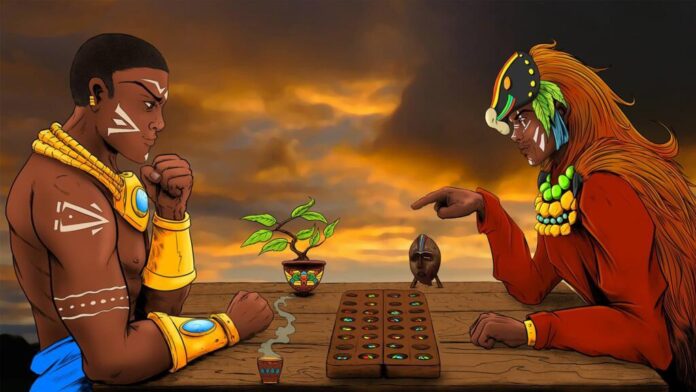
The gaming industry is steadily emerging as one of the most dynamic sectors of the global digital economy, driven by widespread smartphone adoption, the expansion of mobile internet, and a very young African population. Long marginalized in the continent’s industrial strategies, it is now attracting investors, governments, and international studios. Between massive game consumption, the rise of local studios, and the development of e-sports, Africa is seeking to position itself within a global industry still dominated by Asia, North America, and Europe.
From May 20 to 24, 2026, the 3rd edition of the Morocco Gaming Expo was held in Rabat at the Sofitel Jardin des Roses, under the High Patronage of King Mohammed VI. The event brought together public actors, studios, publishers, investors, and telecom operators around a shared objective: structuring a video game ecosystem in Morocco and accelerating its integration into global gaming value chains. Beyond technological showcases and e-sports competitions, the stakes are now clearly economic: positioning Morocco as a regional hub and, more broadly, placing Africa on the global video game map.
Beyond the event itself, the sector is undergoing rapid transformation across the continent. Video games are no longer just imported cultural products but an emerging market driven by massive usage. According to Newzoo data, the global gaming industry generates more than 180 billion dollars in annual revenue, making it one of the largest segments of digital entertainment, ahead of both cinema and music combined. This global momentum is also spilling over into emerging markets, including Africa.
Africa’s video game market is estimated at around 1.8 billion dollars
On the continent, growth is almost entirely driven by mobile gaming. A study by Carry1st estimates Africa’s video game market at around 1.8 billion dollars, with strong annual growth, and more than 90% of revenues coming from mobile platforms. This structure is explained by the limited penetration of consoles and high-end PCs, but also by the rapid expansion of affordable smartphones.
Demographics remain a key driver. According to the United Nations, Africa is the youngest continent in the world, with the majority of its population under the age of 25. This youth represents the core of digital consumption. Gaming therefore fits into everyday mobile-first habits already shaped by social media and video platforms.
Morocco, Egypt, Nigeria, Kenya, and South Africa
Across several countries, ecosystem structuring is gradually taking shape. Morocco, Egypt, Nigeria, Kenya, and South Africa concentrate most studios and initiatives. These markets are beginning to produce local content, even though the majority of games consumed are still developed outside the continent. The key challenge remains building local intellectual property and strengthening technical capabilities.
A GSMA industry representative summarizes this dynamic in a report on Africa’s mobile economies: “Africa is not simply catching up with a digital revolution; it is redefining it through mobile,” a statement that directly applies to gaming, where smartphones play a central role in access and adoption.
E-sports is another major growth engine. Local and regional competitions are multiplying, supported by telecom operators and streaming platforms. Games such as EA Sports FC, Valorant, and Free Fire dominate competitive usage. E-sports is gradually becoming a structured industry with professional teams, sponsors, and international events.
However, major challenges remain. Funding for African studios is still limited, and venture capital investment is concentrated in a few hubs. Monetization is constrained by relatively low purchasing power in several markets. Infrastructure disparities also persist, even though mobile coverage continues to expand rapidly according to GSMA data.
Training and skills development are another critical issue. Building a gaming industry requires expertise in programming, 3D animation, game design, and artificial intelligence. While incubators and training programs are emerging, the ecosystem is still in an early stage of development.
Africa is gradually becoming a testing ground for new mobile gaming business models
In this context, international investment is increasing. Global publishers and technology funds are showing growing interest in African markets, seen as long-term growth drivers. Africa is gradually becoming a testing ground for new mobile gaming business models.
The main strategic challenge remains the shift from a consumption market to a production market
The main strategic challenge remains the shift from a consumption market to a production market. As long as most consumed content is imported, value capture will remain limited. Countries investing in infrastructure, education, and industrial policy will gain a competitive advantage.
The Morocco Gaming Expo 2026 reflects a broader trend: Africa’s gaming industry is entering a phase of structuration. However, this structuring remains uneven, fragile, and highly dependent on long-term investment.
Africa is no longer just playing games made elsewhere. It is beginning to design its own game.